Saturday, February 15, 2020

King of the Lake

Lake Fulmor, a small lake outside of Idyllwild, is a place that people like to fish and picnic. I don't visit here often but I made sure to come this week after I received another birding tip....
My friends, Dave and Barb, told me that a fishing bird was seen skimming and diving into the water. Could it be one of my very favorite birds? The Belted Kingfisher? I have never seen a kingfisher in our mountains so this would be a great sighting for me.
Luck was definitely on my side! I arrived 15 minutes after getting the tip about this fun bird and I found it. The challenge was trying to get a photograph! You can see from the photo that this is a very small lake. Most people would call it a pond. I followed this bird up and down the side of the lake for 1 1/2 hrs. Just as I approached for a photo, it flew to the far end of the lake. This comical activity occurred over and over. I would walk close to the king of the lake and she would fly to the other end.
This was my final photo of the day before the sun disappeared. I was thrilled to see this beauty.

Today, I returned for another look at this rare sighting in the mountains. It has been only a few days since I saw the kingfisher so I expected to see it again but no luck today. It must have been passing through the area and left for another fishing hole.

Instead of the kingfisher, I was dazzled by the colors of a resident pair of Mallards. It is easy to take these ducks for granted since they are quite common. Now is the time to enjoy their spectacular feather colorations. So the lesson in this blog is that if someone gives you a tip on a really cool bird that you want to see, go immediately! Don't wait several days for it may disappear before you arrive.

Click on photos to enlarge.
Photos and content by Robin Roberts.

Wednesday, January 15, 2020

It Began with a Horseshoe

Our good fortune started with finding a horseshoe. How many times have you found one in your life? For me? Never! It was a good beginning to the week.
When you get to know your local birds and what habitat they reside in, you can almost guarantee that you will find them in their favorite spots. These beautiful California Scrub-Jays (Aphelocoma californica) are a perfect example. Whenever I travel down to Garner Valley, I know that I will see at least a few of these birds. They usually have an acorn in their beak as they fly to a spot to stash them in the ground.
Then there are the moments when you see a familiar bird like this Red-shouldered Hawk (Buteo lineatus) in a unique location. However, bird chasing occurs when you get a tip to see a rare or unexpected bird. We received a tip that a couple of really neat birds were in Garner Valley so off I went to find them yesterday. No guarantees, of course, since birds are quite mobile.
Imagine looking for a couple of unique birds in this location. It certainly is a beautiful spot to spend the morning no matter the outcome.
Luck was on my side. This lone Lewis's Woodpecker (Melanerpes lewis) caught my eye. These quiet woodpeckers are irruptive visitors which means you never know when one will show up. Like Acorn Woodpeckers (Melanerpes formicivorus), they eat acorns during the fall and winter but they are masters at catching aerial insects from open snags such as this one.

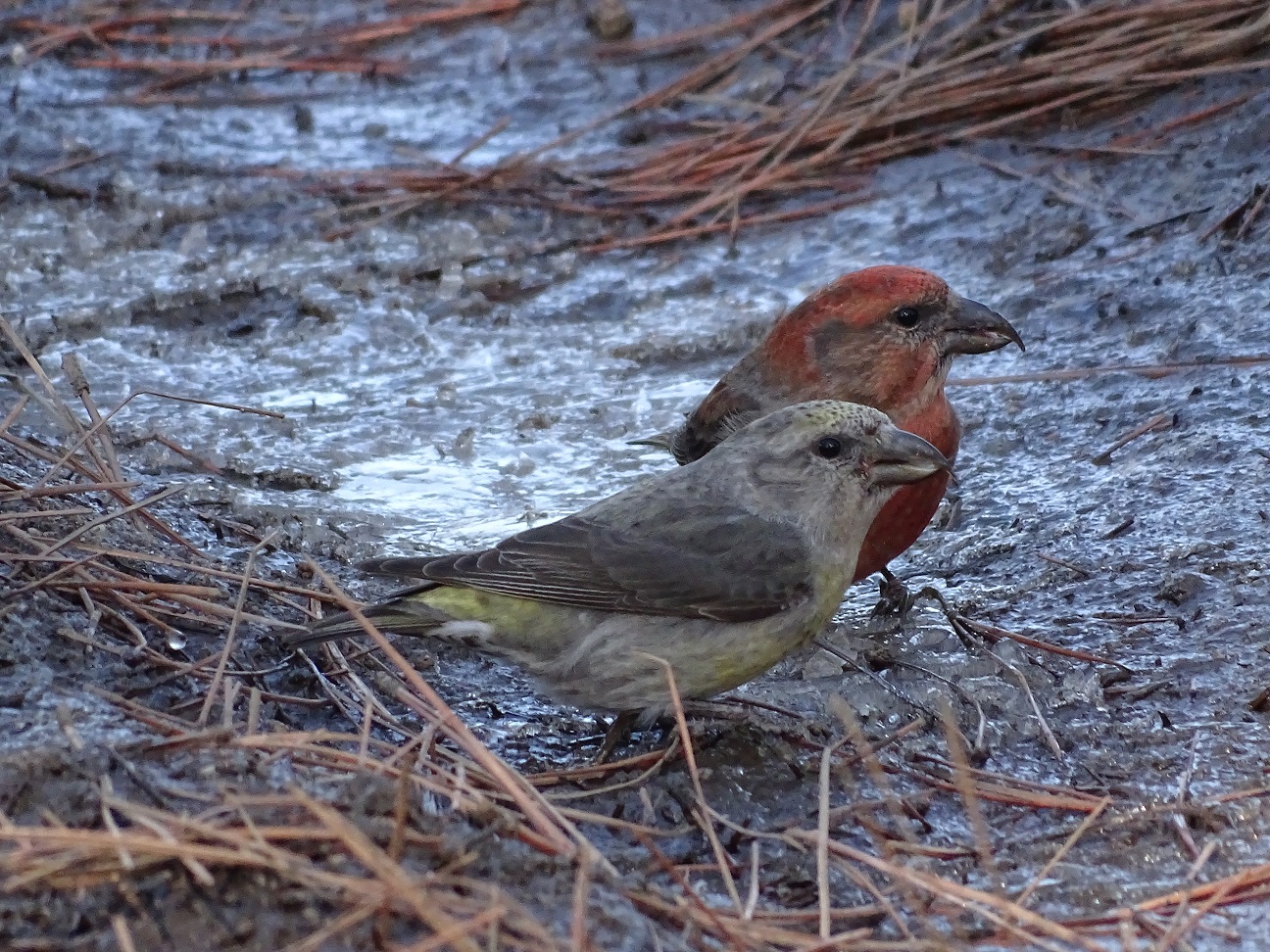
While admiring this woodpecker, six Red Crossbills (Loxia curvirostra) landed in a puddle at my feet. Trust me, that has never happened to me before! Notice the curved crossed bills on these birds. They are able to open closed pine cones with these superb "tools" and extract seeds with their tongues.
As for my horseshoe, I'm keeping it turned up so the luck won't fall out as recommended by my dear cowgirl friend.

Click on photos to enlarge.
Photos and content by Robin Roberts.


Sunday, January 5, 2020

From Snow to Sand - Part 2

Bighorn sheep 

Snow is great but it sure is fantastic to be able to head to the desert to enjoy a break from the cold.
What a magnificent sight to see a bighorn sheep on a rocky ridge!

We chose to hike the 6 mile Eisenhower trail which only has access through the Living Desert. The trail passes through a flat, open sandy area with lots of Creosote bushes and green limbed Palo Verde trees. From there, you enter a rocky desert wash which seasonally fills with water before drying up for the majority of the year.


As you climb to the 1000ft peak, the views become filled with the snow-covered mountains that we temporarily escaped for the day.


There are quite a lot of desert hikes one can take in the winter. A good place to start is by joining hiking groups through the Friends of the Desert Mountains in Palm Desert. While you are at it, you can become a volunteer with the group and participate in a wide variety of activities including citizen science monitoring, trail maintenance, and educational activities. Go to desertmountains.org to learn more. This organization is vital in the preservation of the desert and their efforts support conservation and research in the desert.

Costa's Hummingbird (Calypte costae)

There are a lot of special birds that make the desert their home. One which I admire is this hummingbird. In contrast to the Anna's hummingbird's bright red gorget, Costa's gorget is a brilliant purple when the light hits it. We found one guarding a little patch on the trail.

Verdin (Auriparus flaviceps)

Another favorite resident of mine is this small active yellow-headed bird. It is a little bit smaller than a mountain chickadee. It was busy foraging in creosote bushes early on in the trail.

Say's Phoebe (Sayornis saya)

At the peak of the mountain, we found this phoebe flycatching.

Greater Roadrunner (Geococcyx californianus)

We didn't see this classic desert icon on this hike but I saw one a week or two earlier in the desert so I had to include it! The roadrunner is one of the most famous birds in the country thanks to Wile E Coyote and Looney Tunes. Enjoy!


Click on photos to enlarge.
Photos and content by Robin Roberts.


Thursday, January 2, 2020

From Snow to Sand - Part 1

Exactly one week ago, we had another snowy blast. We have had both a white Thanksgiving and a white Christmas! It is always a welcome sight since it helps replenish the forest after a dry summer and fall.

Our goal is to get on a trail while the snow is fresh. Our Viking friends would be proud of our choice of a picnic site in the snow. However, they are much tougher than us!
Acorn Woodpecker (Melanerpes formicivorus)
Winter storms are a challenge for our resident birds but most of them are resilient survivors. Some have cached away food for tough times like these clever woodpeckers.
Some birds deal with the cold nights by roosting together in nest cavities. You may notice some birds using one of your birdhouses for a winter home at night.
Anna's Hummingbird (Calypte anna)
If you feed the birds in the winter, be sure to knock the snow and ice off of the feeders every day and replace the froze hummingbird nectar. These birds amaze me! I was totally relieved when I discovered our resident hummingbird reappear after a couple of brutal days!
The melting of snow has encouraged birds to enjoy a proper "bath" to preen their feathers.
As lovely as the snow can be, there gets to be a point when you want a break from shoveling and icy driveways. What do you do if you live in Idyllwild? Head to the sand. Look for part 2.

Photos and content by Robin Roberts.
Click on photos to enlarge.


Sunday, December 8, 2019

A Mountain of Snow

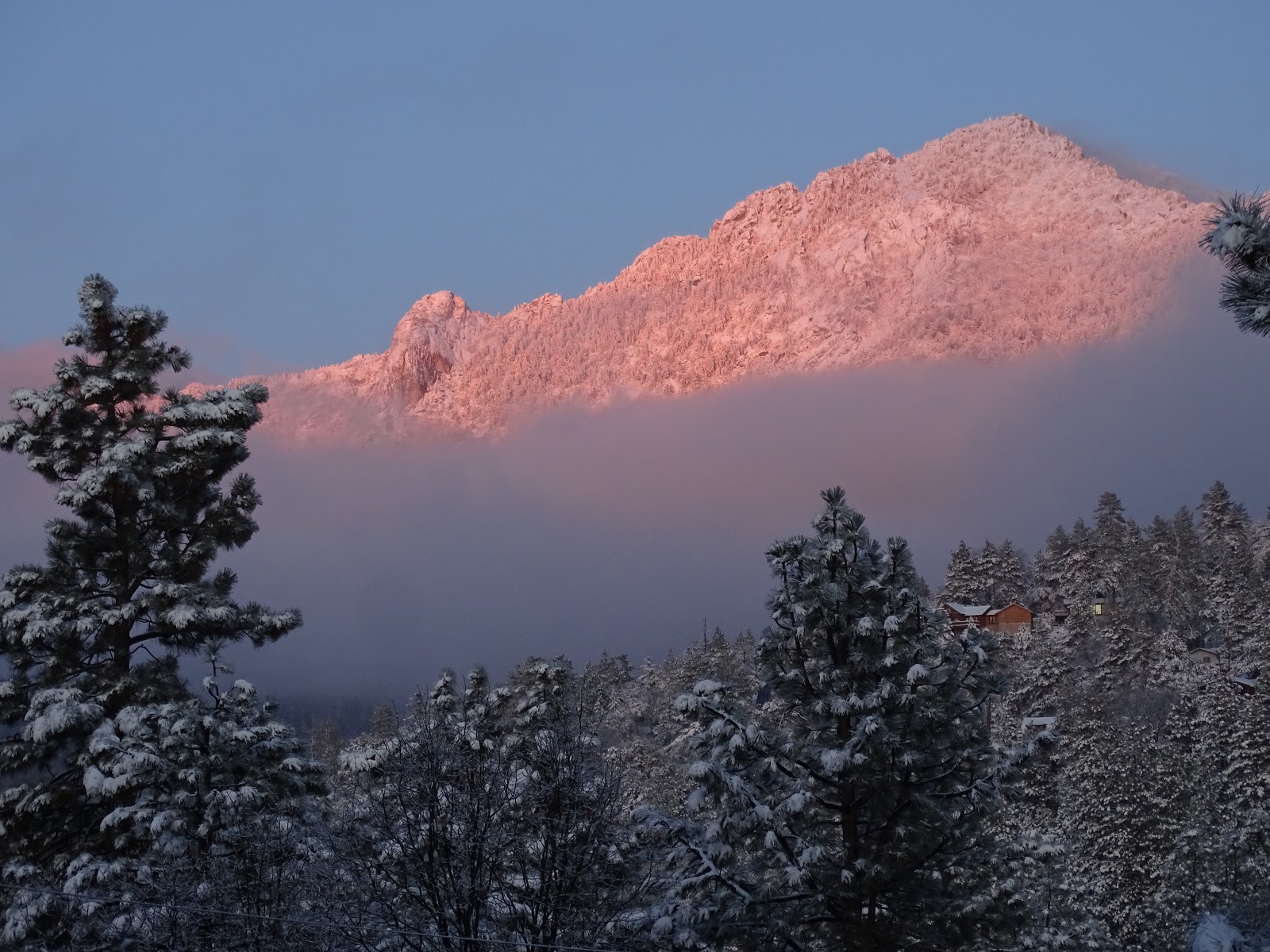
A mountain full of snow is what we received for Thanksgiving. What a beautiful sight!
Over a foot and a half fell within 2 days. Since moving here, we haven't experienced this much snow at once. It was a perfect time to play outdoors but a terrible time to cook a Thanksgiving dinner since the town lost power. No problem for us since we ate early.
Our "tree monkey" lost one of his tree travel routes when a huge oak limb collapsed under the weight of the snow. The western grey squirrels have such useful, fluffy tails. When it's raining or snowing, they just flick it over their heads like an umbrella or cozy blanket.
Oregon Junco
Oak Titmouse
These are a few of the birds hanging out pretty close to our backyard feeders.
Here is beautiful Lake Hemet a few days after the snow fell.


Despite the fact that Garner Valley doesn't get much snow usually, the cattle seemed to be adapting without any trouble.
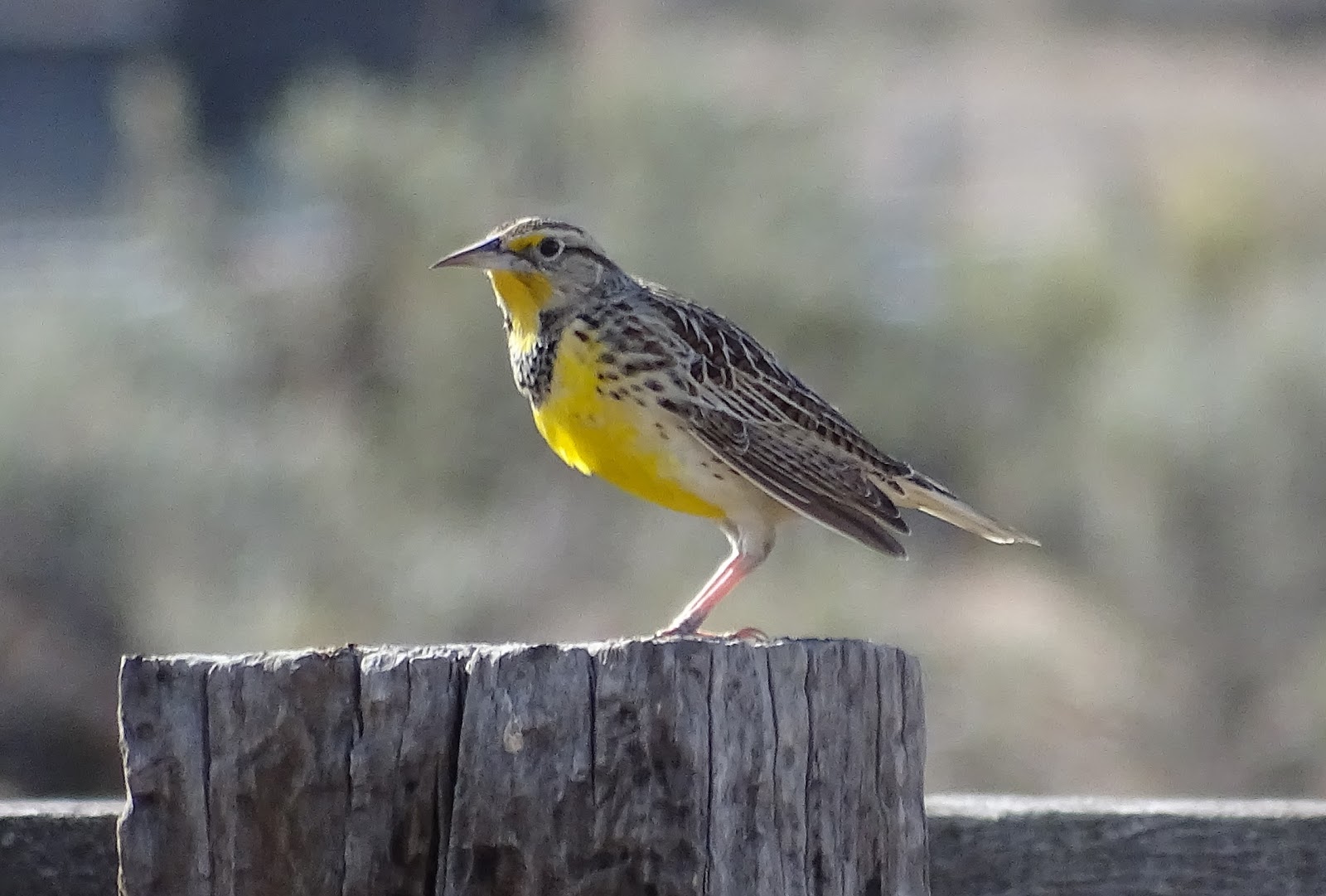
You would almost think it was Spring hearing the Western Meadowlarks singing from posts near the cattle.
After a week of rain, most of the snow has melted. We will always remember the memorable Thanksgiving snowstorm!

Photos and content by Robin Roberts

Click on photos to enlarge.

Tuesday, November 5, 2019

Welcome to the Desert - Scorpions, Birds, and Bananas

Camping in the desert! What a grand experience! The night skies are full of stars, the air is quiet except for the owls and coyotes and the mornings are magnificent. Plus, the days are filled with a chance to see the endangered, magnificent peninsular bighorn sheep.

One of my very favorite birds to find in the desert is the Cactus Wren, Camylorhychus brunneicapillus. During the breeding season, its unique voice fills the desert. This time of year it is a little harder to find but I found one in a fine spiny cactus.
Ocotillo


Costa's Hummingbird, Calypte costae
This time of year, the blooming flowers are few so the resident hummingbirds keep a sharp eye on any intruders to their "patch".
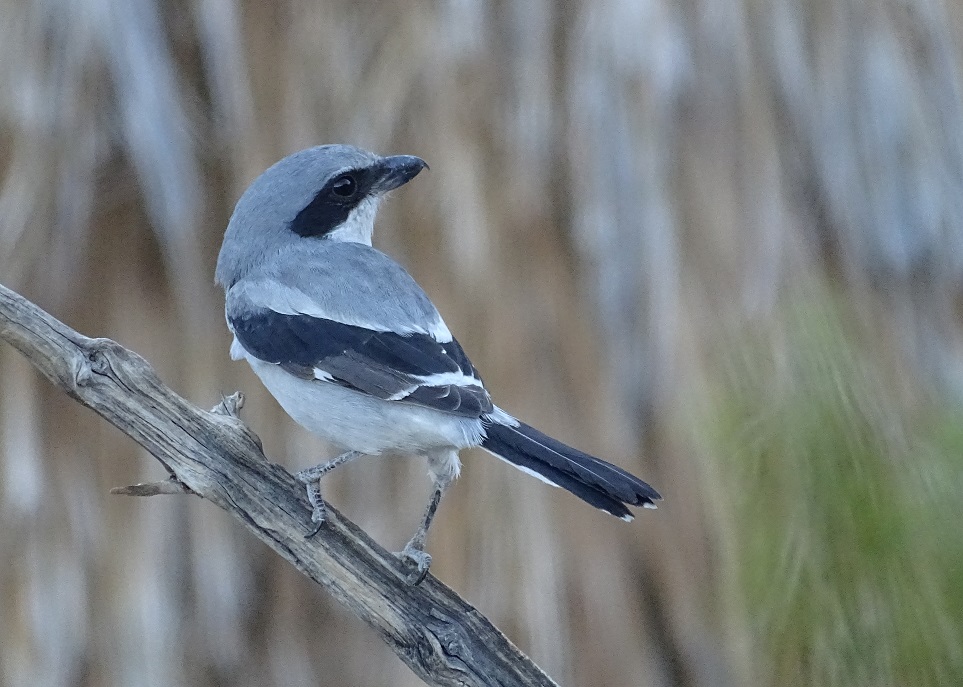
Loggerhead Shrike, Lanius ludovicianus
These mighty "butcher birds" have quite a reputation with impaling their prey on sharp places like cactus spines. I have yet to find their prey in this precarious position but one day, I might encounter it.
When night falls, it's time to pull out the blue lights to find the glowing scorpions. We found some as small as my baby fingernail but this one was over 2 inches long. Quite impressive!
Anza Borrego desert is close to the shrinking Salton Sea. It traditionally has been an important stop on the Pacific Flyway for migrating and wintering birds but it is currently challenged by increasing salinity and dropping water levels due to diversion. I fell in love with this place when we moved here but I discovered that locals have mixed opinions of this important place due to misinformation. Finding ways to mitigate its decline are a top priority that should continue despite the challenges.
On my way to the sea, I found that an Osprey had replaced the Great Blue Heron that perched on this sign last time I was here.
Burrowing Owls, Athena cunicularia
What a rewarding sight! Finding burrowing owls surviving due to interventions is a reassuring sign.
Here is a view of the beautiful Salton Sea that is shrinking day by day. I am not alone in hoping that this special desert sea will not disappear completely. When I wake up in the morning at the fire lookout tower on Tahquitz Peak in the San Jacinto Wilderness, I start my day scanning the horizon for this body of water that has provided life for thousands of birds during the winter.
The desert is known for being a quirky place. Next to the Salton Sea is quite a unique museum...the International Banana Museum. This was my first visit.


For a one dollar contribution, you can explore this record collection of banana regalia in one spot. Why the desert? I have no idea! But who cares, it brings a smile to your face, guaranteed! Enjoy!

For more information about the bighorn sheep, check out this video by Mark Jorgensen who has dedicated his life to protecting them. He also published a beautiful, informative book about them called Desert Bighorn Sheep.

Jorgensen, M. [Anza Borrego Explained "We tell you where to go."]. (2019, August 31). The Importance of the Endangered Species Act [Video File]. Retrieved from https://www.youtube.com/watch?v=b-xBnxQav24&feature=youtu.be


Click on photos to enlarge.
Photos and content by Robin Roberts.